|
1.
CENTRAL AND WEST AFRICA
War-related tensions creating uncertainty
Market conditions remain largely unchanged with only a
slight improvement interest in Okoume from China.
European markets remain quiet with limited activity and
no meaningful recovery in demand. The Middle East
markets are still slow but relatively steady, although
current war-related tensions are creating uncertainty. The
coming month should provide a clearer indication of how
this situation will affect trade flows and demand.
In the Central African Republic, Cameroon and Gabon
producers are now back in operation with some at full
capacity. However, the wider geopolitical situation
remains complex and its possible impact on trade, logistics
and confidence is still unclear. Freight rates are under
pressure with shipping companies announcing price
increases, this is adding further strain to an already
cautious market environment.
Overall, demand in international markets remains dull.
International tensions are adding a further layer of
uncertainty and Europe’s response to the Iran conflict may
prove important in shaping wider trade sentiment. For the
moment, the sector remains cautious with little change in
demand and continued sensitivity to political and freight
developments.
Gabon
The level of demand remains challenging but one notable
development is the return of Chinese demand for Okoume
which comes as a significant and positive surprise. This
renewed interest is also supported by increasing orders
from the Middle East providing some encouragement to
sawmillers. At the same time, competition from Brazil
remains strong with low-priced pine continuing to appear
in the markets such as the Philippines and the Middle East
maintaining pressure on African utility species.
Electricity supply continues to be a major concern. Despite
repeated assurances from authorities the situation has not
improved. The two Turkish Karpowerships remain in
operation after a critical deadline in mid-March, when the
government made a payment to avoid a shutdown.
However, power cuts continue regularly, often several
times per day and in some areas water shortages are also
being reported.
Container availability remains stable with no reported
shortages. Port operations at Owendo are functioning
under normal conditions and transport to and from the port
is not facing major disruptions.
The Gabon timber sector shows early signs of
improvement due to renewed demand from China and the
Middle East. However, persistent infrastructure
challenges, particularly electricity supply continue.
Paramilitary Water and Forestry Corps formed
The domestic media has reported the Minister of Water
and Forests, Maurice Ntossui Allogho, announced the
imminent signing of an agreement with the French
Development Agency (AFD) within the framework of a
debt conversion mechanism.
This Agreement reportedly allows for the mobilisation of
resources for the construction of barracks, administrative
buildings and technical infrastructure for the benefit of the
paramilitary Water and Forestry Corps, recently
established by decree.
The media also reports the Water and Forestry Corps will
be integrated into the defense and security forces marks,
saying this is a significant step forward in terms of
discipline, operational effectiveness and State authority
and aligns with the President's commitment to making
sustainable governance and environmental sovereignty
strategic priorities.
See: https://www.gabonreview.com/gabon-une-convention-
imminente-avec-lafd-pour-financer-les-infrastructures-du-corps-
paramilitaire-des-eaux-et-forets/
Cameroon
The correspondent reports the timber sector in Cameroon
is showing signs of operational recovery, although demand
remains uneven across various markets. Chinese operators
have largely returned and are actively seeking
newcontracts which is driving renewed activity, however,
overall production remains cautious. Many sawmills are
operating on a single shift, reflecting slow demand and a
wait-and-see approach from buyers. It has been reported
that three mills have closed in Douala and are relocating
outside the city.
Container availability is sufficient and there are no
reported shortages. Port operations, at both Douala and
Kribi, are functioning normally with no significant
disruptions.
The return of Chinese operators is a positive sign for
activity levels but the overall market remains subdued.
Production is controlled, demand is selective and price
pressure, especially from competing materials, continues
to weigh on key species. The short-term outlook remains
stable but cautious with gradual improvement dependent
on stronger demand from Asia and the Middle East.
Republic of the Congo
The timber sector in the Republic of the Congo remains
stable with no major disruptions reported. Operations
continue under relatively normal conditions, although
overall market sentiment remains cautious in line with
broader regional trends.
Harvesting activities are ongoing without major
constraints. In the Likouala region, transport conditions
are improving, supported by ongoing repairs to laterite
roads. Timber flows are increasingly directed toward both
Kribi and Doula Ports.
Container availability at Pointe-Noire remains stable with
no shortages reported. Port operations are functioning
normally and there are no significant disruptions affecting
shipments. Export logistics remain well organised between
northern and southern routes.
The Congolese timber sector continues to operate under
stable but subdued market conditions. Improvements in
transport infrastructure, particularly in the north, are
supporting operations. However, demand remains
dependent on external markets and the overall sentiment
remains cautious, with only limited short-term changes
likely.
Through the eyes of industry
The latest GTI report lists the challenges identified by the
private sector in the Republic of Congo and Gabon.
chrome-
extension://efaidnbmnnnibpcajpcglclefindmkaj/https://www.itto-
ggsc.org/static/upload/file/20260317/1773728709112724.pdf
2.
GHANA
Utility Commission announces reduction in tariffs
The Public Utilities Regulatory Commission has
announced a reduction in utility tariffs for the second
quarter of this year, effective 1 April 2026 when electricity
charges are set to be reduced by 4.81% and water tariffs
will go down by 3.06%.
According to the PURC statement, these adjustments will
be carried out in line with the Commission’s mandate to
review tariffs on a quarterly basis reflecting developments
within the quarter. The quarterly reviews track and
incorporate movements in key factors whose variability
affects the operations of Utility Service Providers (USPs).
Some analysts have explained that the factors considered
in arriving at the tariff revisions were based on macro-
economic data before the US and Israel led war with Iran.
It is therefore compelling that, should the ongoing war
prolong or escalate, these gains to be enjoyed by
manufacturing companies may be wiped away in the next
quarter of utility tariffs.
Electricity tariffs have surged by over 28% since January
2025 driving up production costs for the manufacturing
sector. Industry players have complained that high tariffs
continue to undermine industry competitiveness.
According to the Chief Executive Officer (CEO) of Ghana
National Chamber of Commerce and Industry (GNCCI),
Mark Badu-Aboagye, Ghanaian manufacturers are paying
among the highest rates per kilowatt-hour globally. He
therefore urged government and the 24-hour Economy
Secretariat to prioritise affordable energy.
Meanwhile, Ghana’s year-on-year inflation rate has
declined further to 3.3% in February 2026, according to
provisional data released by the Ghana Statistical Service.
See: https://www.graphic.com.gh/news/general-news/electricity-
and-water-tariffs-to-drop-from-april-1-purc-announces-new-
rates.html
and
https://www.purc.com.gh/attachment/288818-
20260313090334.pdf
and
https://thebftonline.com/2026/03/19/24-hour-economy-success-
hinges-on-power-cost-gncci-ceo/
Primary product exports accounted for around 50% of
total receipts
Ghana exported thirteen different wood products with a
cumulative volume of 15,741 cu.m during the first month
of 2026. Overseas market destinations included Asia
(64%), Europe (19%), America (8%), Africa (8%) and
Middle East (1%), according to statistics from the Timber
Industry Development Division (TIDD).
January shipment registered decreases of 30% in value and
24% in volume compared to the same period in 2025 when
the export figures were Eur9,74 million from 20,594 cu.m.
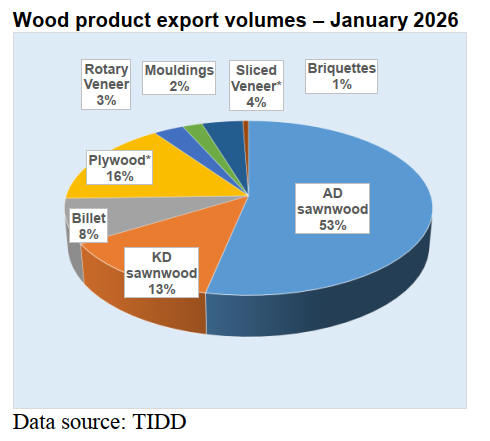
Of the shipments air-dried sawnwood accounted for 53%
of the total export volume for the period with the
remaining products accounting for the balance of the total
export volume. The graph below shows the pattern of
volume distribution for the period.
The TIDD report revealed that primary wood products
comprising air-dried sawnwood, billets and kindling
earned Eur3.33 million from 9,679 cu.m of the total export
of wood products in January 2026.
The figures indicated a decrease of 43% in value and a
decrease of 34% in volume respectively compared to the
primary wood products export figures, 14,689 cu.m valued
at Eur5.82 million recorded in January 2025.
Secondary Wood Products comprising of kiln-dried
boules, briquettes, kiln-dried sawnwood, plywood, rotary
veneer and sliced veneer generated Eur 3.22 million from
a volume of 5,752 cu.m in January 2026. The figures
indicated a decrease of almost 10% in value and an
increase of 4% in volume respectively as compared to the
secondary wood products export figures in January 2025
which were 5,525 cu.m valued at Eur3.57 million.
Mouldings were the only product that contributed to the
Tertiary Wood Products for the period. Mouldings
contributed Eur0.30 million from a volume of 309 cu.m to
total wood product exports in January 2026.
These figures represnt a decrease of 15% in value and a
decrease of 18% in volume respectively as compared to
the tertiary wood products export figures in January 2025
of 379 cu.m valued at Eur0.35 million.
Minister urges citizens to protect country’s forest
The Minister for Lands and Natural Resources, Mr.
Emmanuel Armah Kofi Buah, has emphasised a critical
shift in Ghana’s approach to reforestation. Speaking at the
International Day of Forests event at the Achimota Forest
Reserve in Accra he urged citizens to look beyond the
initial act of planting trees and commit to their long-term
protection and nurturing.
Mr.Buah stressed that true sustainability hinges on
sustained care, asserting that a seedling represents a
promise, but a mature tree embodies a lasting legacy. This
perspective underlines the idea that environmental efforts
must encompass the entire life cycle of trees for maximum
impact.
The Minister detailed the government's "Tree for Life
Initiative" not merely as an ecological endeavor but as a
robust, long-term economic strategy. He explained that
this initiative serves as Ghana’s internal mechanism for
participating in global reforestation, actively transforming
the process into a viable economic avenue for young
people and rural communities.
According to him, by restoring degraded lands, the
programme is designed to cultivate a "green asset base,"
capable of generating carbon credits and attracting green
investments.
He reported that under the initiative 30 million seedlings
were successfully planted in 2015 creating over 41,000
green jobs. With this momentum, the government is
setting an equally ambitious target of another 30 million
seedlings for 2026.
Mr. Buah revealed that severe ongoing challenges threaten
the survival of these young trees. He specifically cited
rampant bushfires, illegal logging activities and the
destructive encroachment of illegal mining as major
hurdles.
He issued a widespread appeal, calling upon all segments
of Ghanaian society, including traditional leaders, the
private sector and civil society organisations to deepen
public awareness and ensure collective accountability.
See: https://www.myjoyonline.com/lands-minister-urges-
ghanaians-to-protect-and-nurture-trees-not-just-plant-them/
MoU on nationwide tree crop transport
The Tree Crops Development Authority (TCDA) has
announced a regulatory clampdown on tree crop
movement in Ghana to formalise the sector. This initiative,
unveiled during an MoU signing with the Forestry
Commission (FC), aims to strengthen enforcement via the
Commission’s nationwide checkpoints.
According to the Chief Executive Officer (CEO) of the
TCDA, Dr. Andy Osei Okrah, a core component is the
Conveyance Certification System (CCS), implemented
under L.I. 2471, Section 55.
This system will track the transport of the six key tree
crops including the cashew, coconut, oil palm, rubber,
mango and shea. The CCS ensures the movement of tree
crops is documented, verifiable and transparent across the
value chain within the country.
The compliance is now mandatory nationwide, where
licensed traders must obtain a TCDA Conveyance
Certificate before transporting these commodities.
This certificate validates that sourcing, trading, and
movement meet TCDA standards and can be acquired at
zonal offices or checkpoints.
See: https://www.myjoyonline.com/tcda-forestry-commission-
roll-out-nationwide-crackdown-on-tree-crop-transport/
Through the eyes of industry
The latest GTI report lists the challenges identified by the
private sector in Ghana.
chrome-
extension://efaidnbmnnnibpcajpcglclefindmkaj/https://www.itto-
ggsc.org/static/upload/file/20260317/1773728709112724.pdf
3. MALAYSIA
Forest harvest area reduced
Under the 13th Malaysian Plan to further protect the
forests, the area of annual allowable cut (AAC) in
permanent reserved forests (PRF) has been reduced to
890,000 ha., down from 1,165,300 ha. in the previous
plan.
Natural Resources and Environmental Sustainability
Minister, Arthur Joseph Kurup, said the reduction of the
area would positively impact forest conservation,
sustainable forest management practices as well as the
country’s economic and social needs. Kurup highlighted
that the forestry and agricultural sector contributed over
RM6 bil. to last year’s gross domestic product.
He said the Ministry was also working to reduce reliance
on conventional logging and expand into sustainable
forest-based eco-tourism. He said State Governments
would be prioritised for the Ecological Fiscal Transfer for
Biodiversity Conservation allocation to streamline online
applications and payments for PRF entry permits for eco-
tourism purposes.
Kurup also revealed that the Forest Research Institute
Malaysia was also guiding rural communities on
environmental conservation through training programmes
and technical support.
“As a result of this guidance local communities will be
able to manage, run businesses and activities that are
based on eco-tourism and recreation in a more systematic,
competitive and sustainable manner without
compromising on the forests’ ecosystem,” he said.
See:
https://www.thestar.com.my/news/nation/2026/03/23/malaysia-
scales-down-annual-forest-harvest-to-890000ha
Expanding global reach
Malaysia’s furniture industry is expanding its global reach
by tapping into emerging, high-potential markets such as
Chile as part of ongoing efforts to diversify export
destinations, according to Malaysia External Trade
Development Corporation (Matrade).
Matrade, in a statement, said Malaysian manufacturers
continue to show resilience by adapting to evolving
demand patterns and positioning themselves in higher
value segments, supported by a focus on design, quality
and sustainability.
According to Matrade, dining and living room sets remain
the top-selling furniture categories in Chile with
consumers showing a clear preference for solid wood
products with premium finishes. Demand is also rising for
“small living” solutions as urban spaces shrink,
particularly for apartments under 40 square metres. This
has driven interest in multifunctional furniture such as
extendable tables and sofa beds, Matrade indicated.
“Malaysian manufacturers have successfully entered the
mid-to-high end market segment by offering high-quality
solid wood furniture that balances premium craftsmanship
with attractive pricing. It added that Malaysia is currently
Chile’s 10th largest furniture supplier globally and the
second largest among ASEAN countries.
See:
http://theborneopost.pressreader.com/article/282218017311407
Agreement on Reciprocal Trade (ART) – null and void?
The situation in international trade remains very fluid,
especially concerning the United States. The United States
Supreme Court has struck down the so-called ‘Liberation
Day’ reciprocal tariffs that were imposed by the White
House last year.
As a result, Malaysia’s new Investment, Trade and
Industry(MITI) Minister), Johari Abdul Ghani, was quoted
as saying that the Agreement (ART) Malaysia had
negotiated with America was now null and void.
In reality, the court ruling has brought back uncertainty on
the trade front as the United States has quickly pivoted
away to other measures that allow Washington to impose
tariffs in other ways, some of which could have far worse
implications than under ART.
The White House’s new measures include the new 15%
worldwide tariffs, applicable for 150 days under Section
122, to add to the Section 232 sectoral tariffs. These are
now being stacked up with new measures potentially
under Section 301, which concern unfair trade practices.
See: https://www.pressreader.com/malaysia/the-star-malaysia-
starbiz/20260321/281599542023043
and
https://stratnewsglobal.com/asia/malaysia/malaysia-walks-out-
of-trade-deal-with-us-others-may-follow/
USTR excess capacity probe
Malaysia is among several countries under probe by the
Office of the United States Trade Representative (USTR)
for structural excess capacity and production in certain
manufacturing sectors.
In a statement, the USTR said that the investigations are
being carried out under Section 301 of the Trade Act of
1974 to examine whether the acts, policies and practices of
certain countries contribute to excess production that could
burden or restrict US commerce.
Besides Malaysia, the USTR investigations also cover
China, the European Union, Singapore, Switzerland,
Norway, Indonesia, Cambodia, Thailand, South Korea,
Vietnam, Taiwan PoC, Bangladesh, Mexico, Japan and
India. The USTR said the move comes as “key trading
partners have developed production capacity unfettered
from the incentives of domestic and global demand”,
which it claims leads to overproduction, persistent trade
surpluses and unused manufacturing capacity.
On Malaysia, the USTR said evidence of structural excess
capacity and production exists here through its large or
persistent goods trade surpluses.
The development comes after earlier US tariffs introduced
under Section 301 were struck down by the US Supreme
Court, which ruled that the measures exceeded the
authority granted under existing trade laws.
See: https://ustr.gov/about/policy-offices/press-office/press-
releases/2026/march/ustr-initiates-section-301-investigations-
relating-structural-excess-capacity-and-production
and
https://www.thestar.com.my/news/nation/2026/03/13/malaysia-
included-in-ustr-production-probe
Carbon pricing could begin this year
Malaysia’s planned carbon tax marks an important turning
point in the country’s climate policy framework, say
researchers with Kenanga Investment Bank (Kenanga
Research). The government has signalled its intention to
introduce carbon pricing beginning in 2026, supported by
the forthcoming Climate Change Bill (RUUPIN) that will
provide the legal and regulatory foundation for the
mechanism.
Malaysia’s carbon tax policy is progressing through a
staged legislative process. The government first signalled
the introduction of carbon pricing during Budget 2025,
with enabling legislation expected to be introduced under
the Climate Change Bill. Current policy discussions
indicate that the carbon tax could take effect in 2026
starting with iron, steel and energy sectors.
See:
http://theborneopost.pressreader.com/article/282230902196861
Through the eyes of industry
The latest GTI report lists the challenges identified by the
private sector in Malaysia.
chrome-
extension://efaidnbmnnnibpcajpcglclefindmkaj/https://www.itto-
ggsc.org/static/upload/file/20260317/1773728709112724.pdf
4.
INDONESIA
Enhancing SFM monitoring through
institutional
restructuring
The Indonesian government is strengthening governance
in the forestry sector by improving institutional structures
and enhancing human resources within the Ministry of
Forestry.
During a meeting between the Minister of Administrative
and Bureaucratic Reform, Rini Widyantini and Minister of
Forestry, Raja Juli Antoni, officials emphasised that
restructuring efforts should ensure better coordination,
integration and effective implementation of forest
management policies at the field level. The goal is to align
government programmes with on-the-ground needs while
improving collaboration among central agencies, technical
units and regional governments to avoid overlapping
authority.
The restructuring initiative, proposed by the Ministry of
Forestry, aims to make forest management more adaptive
and sustainable in addressing sector challenges. Raja Juli
Antoni highlighted that protecting and restoring forest
ecosystems is a long-term investment requiring
institutional adjustments.
Meanwhile, Deputy Minister, Purwadi Arianto, stressed
the importance of prioritisng key areas and issues to
ensure that organisational strengthening efforts are
focused and effective, ultimately supporting more
sustainable forest management outcomes.
See: https://www.menpan.go.id/site/berita-terkini/pemerintah-
perkuat-sinergi-pengawasan-hutan-berkelanjutan-melalui-
penataan-kelembagaan
Global furniture hub coming to Central Java
The domestic media has reported a global furniture
company is building a factory in the Kendal Special
Economic Zone (SEZ), Central Java. The Kendal SEZ’s
industrial facilities and business-friendly environment
were key factors in the company’s decision to invest in the
project which spans around 195,000 square metres.
Once operational, the factory will produce a range of
furniture products targeting markets in North America,
Europe and Southeast Asia as well as domestic Indonesian
demand. At full capacity, the facility is expected to export
25,000 containers annually.
The factory, scheduled to begin operations by the end of
March 2027, is also projected to create approximately
9,000 jobs, including 6,000 local positions during the
initial production phase.
See:
https://regional.kompas.com/read/2026/03/16/122226478/kuka-
home-bangun-pabrik-global-di-kek-kendal-investasi-rp-25-
triliun-serap?page=all#page2.
and
https://jateng.tribunnews.com/jawa-tengah/1247286/kendal-
bakal-punya-pabrik-furniture-baru-di-kik-tahun-depan-serap-9-
ribu-lapangan-kerja
Seeking innovative funding for national park
management
Indonesia’s Deputy Minister of Forestry, Rohmat
Marzuki, stated that the government is seeking alternative
funding sources for managing the country’s 57 national
parks, which are currently financed through the state
budget (APBN). He emphasised the importance of these
parks in preserving protected flora and fauna and
maintaining ecological balance, while highlighting the
need to reduce reliance on government funding alone.
To achieve this, the government plans to introduce
innovative financing mechanisms, including international
funding and carbon trading schemes such as afforestation,
reforestation and revegetation.
Earlier, Forestry Minister Raja Juli Antoni announced the
creation of a Task Force on Innovative Financing and
Management of National Parks led by Hashim
Djoyohadikusumo and supported by key figures, for
example, Mari Elka Pangestu.
The initiative aims to develop new approaches so that
national parks can function not only as conservation areas
but also as drivers of sustainable ecotourism.
See: https://en.antaranews.com/news/408658/indonesia-seeks-
innovative-funding-for-national-park-management
and
https://jakartaglobe.id/news/prabowo-to-launch-task-force-for-
national-park-financing
Diplomacy needed to address EUDR
Indonesia is being urged to strengthen its global
diplomacy to reduce any negative impact of the European
Union Deforestation Regulation (EUDR) on its export
performance. According to CORE Indonesia Executive
Director, Mohammad Faisal, the policy acts as a non-tariff
barrier such that the government should adopt a strategic
diplomatic approach to safeguard national export interests
and prevent disruptions to export revenues.
Faisal also highlighted that the Indonesia/European Union
Comprehensive Economic Partnership Agreement (IEU-
CEPA) could be leveraged to address these challenges and
support exporters in meeting EUDR requirements,
particularly in supply chain traceability. He stressed the
need for mutual cooperation, including technical
assistance from the European Union to help developing
countries comply with sustainability standards.
At the same time, the EUDR presents an opportunity for
Indonesia to improve plantation governance by focusing
on sustainable practices and increasing productivity
through intensification rather than land expansion,
ensuring long-term export competitiveness.
CORE (Center of Reform on Economics) focuses on
research and consulting in the fields of economics,
industry, trade, regional development and public policy.
See: https://gorontalo.antaranews.com/berita/394774/pemerintah-
dinilai-perlu-perkuat-diplomasi-global-hadapi-eudr
and
https://www.beritasatu.com/ekonomi/2977749/pemerintah-harus-
perkuat-diplomasi-ke-eropa-demi-kinerja-ekspor#goog_rewarded
Weather modification operations to fight fires
The Indonesian government is expanding efforts to
prevent forest and land fires this year by planning around
35 Weather Modification Operations (OMC) in response
to the potential early onset of El Niño. Weather
modification operations, primarily cloud seeding,
are deliberate interventions in the atmosphere to influence
local weather, such as enhancing precipitation, reducing
hail, or dispersing fog.
Deputy Minister of Forestry Rohmat Marzuki explained
that the Ministry of Forestry, in coordination with the
National Disaster Management Agency (BNPB), the
Meteorology, Climatology and Geophysics Agency
(BMKG) and private partners will conduct land wetting
through these operations to reduce fire risks.
The OMC schedule reflects forecasts indicating a drier and
longer dry season than in 2025, with El Niño now
expected to arrive by mid-2026 at weak-to-moderate
intensity, earlier than initially predicted for 2027.
The operations will require a substantial budget and
involve collaboration between government agencies and
private entities, particularly holders of Forest Utilisation
Business Licenses (PBPH), ensuring a coordinated
approach to mitigating potential fire disasters.
See: https://jatim.antaranews.com/berita/1047270/antisipasi-
karhutla-pemerintah-siapkan-35-operasi-modifikasi-cuaca
and
https://www.nusantaratv.com/news/kemarau-datang-lebih-awal-
kemenhut-siapkan-35-operasi-modifikasi-cuaca
Through the eyes of industry
The latest GTI report lists the challenges identified by the
private sector in Indonesia.
chrome-
extension://efaidnbmnnnibpcajpcglclefindmkaj/https://www.itto-
ggsc.org/static/upload/file/20260317/1773728709112724.pdf
5.
MYANMAR
6.
INDIA
One of the most difficult periods for
manufacturing
sector
The correspondent reports the Indian manufacturing sector
is going through a very difficult phase, one of the most
difficult phases in the last 3 decades. The main reason for
this being the Iran conflict and the shortage of LPG/natural
gas/oil/petroleum and delays in raw material
shipments. All plywood and panel manufacturers’
associations have announced that panel prices will go up
between 3 to 10% depending on the product.
Timber and other raw material imports have
practically ceased as freight rates have shot up drastically.
The repercussions of the conflict will have a long term
effect on the Indian economy.
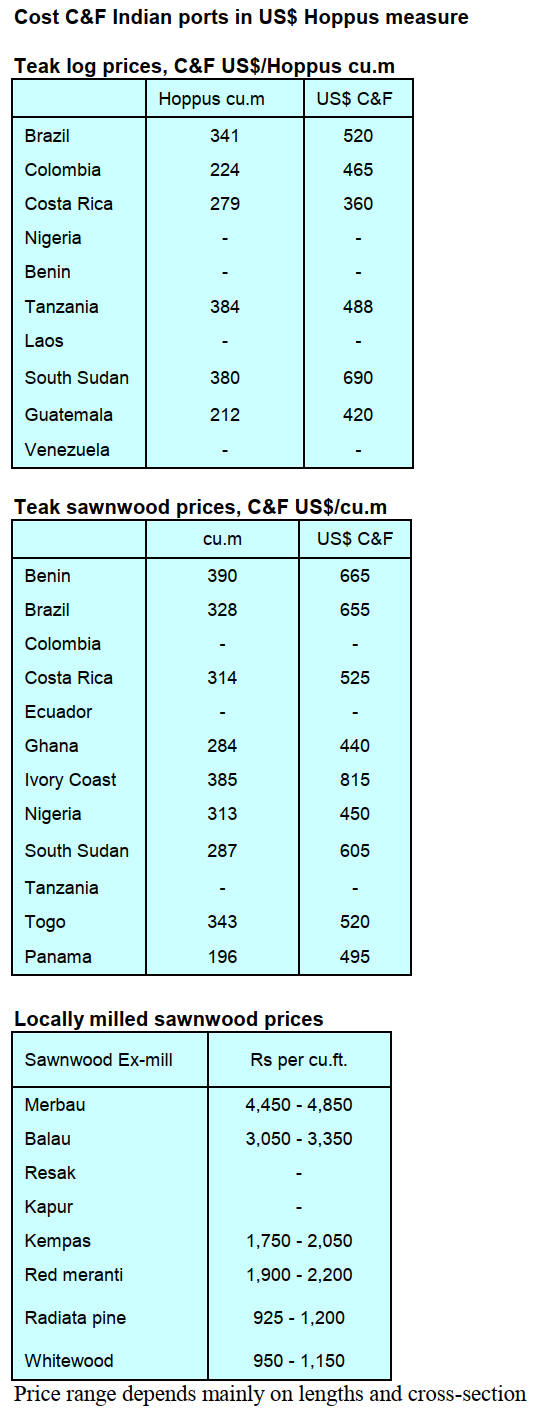
Landed prices for logs and sawnwood jumpe
Increased freight rates have directly increased landed
prices for imported logs and sawnwood, particularly at
major hubs like Kandla, where pine and teak are staple
imports. Rising costs have made it difficult for importers
to rely on traditional routes leading to a focus on re-
evaluating supplier countries to minimise transportation
costs.
Higher costs are also leading to an increase in the
substitution of imported timber with domestic timber,
despite domestic limitations and supply constraints.
Rupee at historic low
In the second half of March the Indian rupee weakened
further and breached the 94 mark against the US dollar, a
fresh historic low amid high levels of foreign outflows, the
result of the conflict in West Asia.
Currency experts attributed the fall to elevated crude oil
prices, geopolitical uncertainty and persistent selling by
foreign portfolio investors.
The Reserve Bank of India (RBI) has been propping up
the rupee to keep down borrowing costs down, a difficult
task in light of the Middle East conflict which threatens to
hit the world’s fastest-growing major economy.
Since the start of the conflict three weeks ago, it is
estimated the RBI has used US$20 bil. in foreign
exchange reserves trying to defend the rupee.
.
See:
https://www.rediff.com/news/commentary/2026/mar/20/rupee-
weakens-to-historic-low-breaches-
93usd/239644b09546fb5cbd9913eea9c5a8b5
and
https://www.ft.com/content/56162e25-17dd-4db7-ba76-
98fca2700923?syn-25a6b1a6=1
Launch of phase-2 reforestation drive
The Confederation of Real Estate Developers’
Associations of India (CREDAI) is initiating the second
phase of its reforestation drive across degraded stretches
of the Western Ghats. In tandem, the organisation formally
recognised workers who successfully completed its
Recognition of Prior Learning (RPL) certification.
CREDAI’s reforestation initiative launched last year aims
to plantation of nearly 2 million saplings across 25
villages, approximately 9,000 acres of degraded forest
land in Maharashtra, commencing from Nashik.
The initiative encompassed awareness programmes and
the promotion of sustainable development practices. It was
implemented in collaboration with the Raah Foundation
and district authorities in Maharashtra. To date, more
than 3,500 acres have been restored through native-species
plantations.
See: https://credai.org/media/view-details/?file_no=101
State authorities to identify land available for
plantation development
The Ministry of Environment, Forest and Climate Change
(MoEFCC) has approved a proposal to allow private and
government entities to utilise degraded forest land for
industrial plantations.
Following a 2 January 2026 amendment to the Van
(Sanrakshan Evam Samvardhan) Adhiniyam,
1980 (formerly Forest Conservation Act) , this move aims
to boost local timber production, reduce import reliance
for industries and rehabilitate degraded land. Projects on
such land are exempt from paying Net Present Value
(NPV) charges and submitting compensatory afforestation
fees, classifying such plantations as forestry activities.
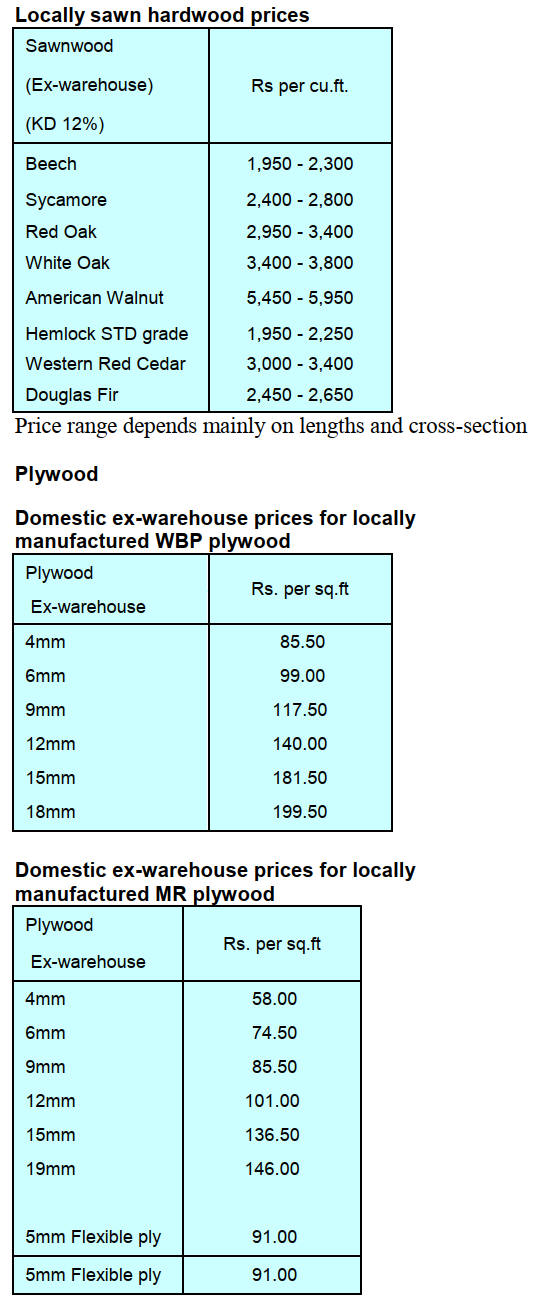
State governments are tasked with identifying degraded
areas and along with the industry, will establish working
committees for implementation. The aim is to meet local
industry demands for rraw materials
See:
https://www.facebook.com/plyreporter/posts/moefcc-approves-
the-proposal-of-making-degraded-forest-land-available-for-
indust/1498713792258106/
7.
VIETNAM
Wood and wood product (W&WP) trade
highlights
According to statistics from Vietnam Customs Office,
Vietnam's W&WP exports in February 2026 reached
US$969.3 million, down almost 40% compared to January
2026 and down 6% compared to February 2025.
Of the total, exports of wood products contributed
US$596.5 million, down 43% compared to January 2026
and down 12% compared to February 2025.
The main reason for this decline was that February
coincided with the long Lunar New Year holidays causing
production and customs clearance delays.
In the first 2 months of 2026 Vietnam’s wood industry
maintained stable growth momentum with W&WP exports
earning US$2.59 billion, up 5% over the same period in
2025. WPs accounted for a large proportion of the exports
reaching US$1.66 billion, down 0.5% over the same
period in 2025.
W&WP exports to China in February 2026 earned
US$162.2 million, up 31% compared to February 2025. In
the first 2 months of 2026, W&WP exports to the Chinese
market earned US$390.8 million, up 49% over the same
period in 2025.
Vietnam’s wood pellet exports in February 2026 amounted
to US$74 million, down 14% compared to February 2025.
In the first 2 months of 2026 the value of wood pellet
exports was reported at US$195 million, up 14% over the
same period in 2025. Although exports in February
decreased in comparison to the strong increase in January,
the overall picture of wood pellet exports in the first 2
months of 2026 is good.
Vietnam's W&WP imports in February 2026 reached
US$188.6 million, down 40% compared to January 2026
and down 10% compared to February 2025. In the first 2
months of 2026 W&WP imports were valued at US$505.4
million, up 25% over the same period in 2025.
Navigating challenges and creating new opportunities
Viet Nam’s wood industry is a vital component of the
nation’s economy, consistently ranking among the top
exporters. The sector is evolving, focusing on sustainable
practices and value-added products, while also navigating
challenges such as trade tensions and tariffs. With a
commitment to sustainability and growing capabilities,
Viet Nam’s wood industry is poised for continued growth
and innovation in the years to come.
Despite a strong export performance, Viet Nam’s wood
sector continues to face several structural and external
challenges. At present the number one risk is policy
direction in the US. While the US remains Viet Nam’s
largest export destination its recent policy developments
have introduced new uncertainty manufacturers remain
highly exposed to policy changes and trade barriers.
To counteract this the Vietnamese government has
prioritised:
Strengthening traceability systems through
blockchain-based verification
Expanding timber to ensure undisputed product
origin and
Diplomatic negotiations with US officials to
prevent further escalation, particularly concerning
compliance with the Lacey Act and anti-dumping
regulations
These efforts are helping Viet Nam’s maintain its
reputation as a compliant and high-quality exporter but the
long-term solution lies in market diversification and
innovation.
Rising competition from foreign investment enterprises
Competitive pressure is also increasing from domestically
based foreign enterprises in Viet Nam’s wood sector.
These companies typically benefit from stronger
technological capabilities, greater capital resources,
advanced management practices and well-established
international distribution networks.
As a result, domestic firms face growing pressure to
upgrade productivity, product quality and corporate
governance in order to remain competitive in global
supply chains.
Structural constraints within the industry
At the same time, several internal constraints continue to
limit the sector’s long-term competitiveness. Viet Nam’s
wood industry remains highly dependent on processing-
based manufacturing, particularly under Original
Equipment Manufacturer (OEM) models.
Limited research and development (R&D) capacity and
insufficient investment in technological innovation
contribute to relatively low productivity levels. In
addition, product portfolios, export markets and industry
segments remain insufficiently diversified.
Labour dynamics are also shifting. As Viet Nam enters a
new phase of economic growth, the wood sector is facing
increasing difficulty attracting workers, as labor moves
toward industries offering higher wages and improved
working conditions.
Strategic diversification and future opportunities
Viet Nam’s wood industry is rapidly diversifying in both
markets and product segments.
In terms of geography, Viet Nam is targeting:
India, which is experiencing rising furniture
demand, welcomes Vietnamese cooperation in
trade and investment;
Middle Eastern countries, where large-scale
infrastructure and hospitality projects create
opportunities for furniture and construction wood
exports and
ASEAN neighbors, where trade is streamlined
through regional agreements such as the Regional
Comprehensive Economic Partnership (RCEP).
Product diversification includes certified wooden
toys and kitchenware for European markets, modular
furniture systems tailored for compact urban housing,
green-certified wood panels and composite materials for
low-emission construction.
Digitisation is also accelerating with many companies
utilising virtual showrooms, AR-enabled customisation
tools and blockchain logistics platforms to connect with
global customers and enhance transparency.
The future
Viet Nam’s wood industry is no longer just a low-cost
alternative. It is emerging as a global force in sustainable,
high-quality and digitally enabled production. The sector
faces significant headwinds, particularly from shifting
trade policies and rising environmental expectations. But
its ability to evolve, through reforestation, FDI attraction,
technological upgrades and market diversification makes it
a model for transformation in the face of global change.
With strategic focus and coordinated action from
government and industry, Viet Nam is well-positioned to
move from being the “world’s workshop” to a sustainable
wood powerhouse.
See: https://www.Viet Nam-briefing.com/news/Viet Nams-
wood-industry-2026-challenges-new-opportunities.html/
This article was originally published in May 2025 and was
updated in March 2026.
Viet Nam’s wood and furniture export outlook 2026
Viet Nam’s wood industry enters 2026 with a positive
growth outlook as furniture consumption in major markets
shows signs of gradual recovery. After a period of global
economic volatility improving conditions in housing and
retail markets are supporting renewed demand for wood
products.
Within this context, the United States continues to play a
pivotal role while also imposing increasingly stringent
requirements on product quality and supply chain
reliability.
E-commerce: A growth avenue for the industry
Alongside traditional export channels, e-commerce is
emerging as a promising avenue for Viet Namese wood
exporters, particularly in the US market. Retail platforms
and furniture marketplaces enable manufacturers to reach
end consumers more directly, expand market coverage and
diversify sales models.
However, participation in e-commerce channels also
places higher demands on supply chain operations,
including on-time delivery performance, inventory
management at destination market sand flexible order
processing. As a result, exporters must not only invest in
product development but also build logistics capabilities
that are aligned with cross-border e-commerce models.
In this context, integrated logistics solutions, covering
international transportation, warehousing and domestic
distribution in import markets are becoming increasingly
important in supporting Vietnamese wood enterprises as
they expand their global sales channels.
Looking ahead, Viet Nam’s wood industry has significant
growth opportunities with the US continuing to serve as
the primary growth driver and e-commerce offering
additional development potential. In an environment of
increasingly demanding market requirements, effective
supply chain management will be a key factor in
sustaining competitiveness.
Close collaboration between Vietnamese wood
manufacturers and logistics service providers can help
support export supply chains creating a solid foundation
for Vietnamese wood products to access global markets.
See: https://vantage-logistics.com.vn/Viet Nams-wood-and-
furniture-exports-outlook-2026-bv512.htm
and
https://vantage-logistics.com.vn/about-us.htm
8. BRAZIL
Progress of the Mato Grosso Forest
Development Plan
The Mato Grosso Forest Development Plan advanced to a
new technical stage following the second meeting
coordinated by the State Secretariat for Economic
Development (Sedec-MT) with participation of the State
Secretariat for the Environment (Sema-MT), the
Federation of Industries of Mato Grosso (Fiemt) and the
Federation of Agriculture and Livestock of Mato Grosso
(Famato).
The meeting aimed to consolidate the baseline document
that will guide the State’s forest policy, including technical
adjustments related to the definition of targets, indicators
and the structuring of the Action Plan.
The proposal seeks to expand legal certainty for investors
and forest producers while ensuring regulatory
predictability considering environmental licensing
requirements and traceability of the sustainable origin of
raw materials used by industry.
During the meeting, data were also presented on the
resumption of investments in planted forests in the State of
Mato Grosso in the Amazon Region. According to Sedec-
MT, projects aimed at expanding the forest base have
already been submitted to the Constitutional Fund for
Financing the Center-West region (FCO) through
consultation letters approved in the preliminary stages of
analysis.
The Forest Development Plan aims to structure public
policies that promote sustainable production of timber and
related forest-based products while strengthening
industrial value chains linked to the sector. According to
Sedec-MT, the initiative establishes strategic guidelines to
reconcile economic growth with sustainability and to
create more stable conditions for attracting new
investments.
See: https://www.maisfloresta.com.br/plano-de-
desenvolvimento-florestal-avanca-em-mato-grosso/
BNDES boosts research on native species silviculture
At the end of 2025 the Brazilian Development Bank
(BNDES) approved the financing of BRL25 million from
its Technological Fund (Funtec) for silviculture research
on native timber species in Brazil.
The project, coordinated by the Brazilian Agricultural
Research Corporation (Embrapa) and the Federal
University of São Carlos (UFSCar), is part of a national
initiative to expand the planting and sustainable
management of 30 priority species from the Amazon and
Atlantic Forest.
The initiative has a five-year duration under the Research
and Development Programme on Silviculture of Native
Timber Species (PP&D-SEN), launched in 2021 by the
Brazil Climate, Forests and Agriculture Coalition.
The initiative brings together universities, research
centers, companies and partner organisations, structuring
subprojects across nine strategic areas, including seed and
seedling production, genetic improvement, vegetative
propagation, forest management, wood technology and the
development of markets and environmental services. In
addition to BNDES financing, the project will receive
additional funding from the Bezos Earth Fund with the
possibility of participation from other financiers.
The programme aims to reduce pressure on primary
forests by promoting the commercial cultivation of native
timber species in degraded areas generating both
environmental and economic benefits.
The initiative contributes to biodiversity conservation,
carbon sequestration, creation of green jobs and the
strengthening of the national bio-economy.
See: https://www.remade.com.br/noticias/21294/bndes-destina-
r$-25-milhoes-para-pesquisa-e-desenvolvimento-de-30-especies-
madeireiras-nativas
Export update
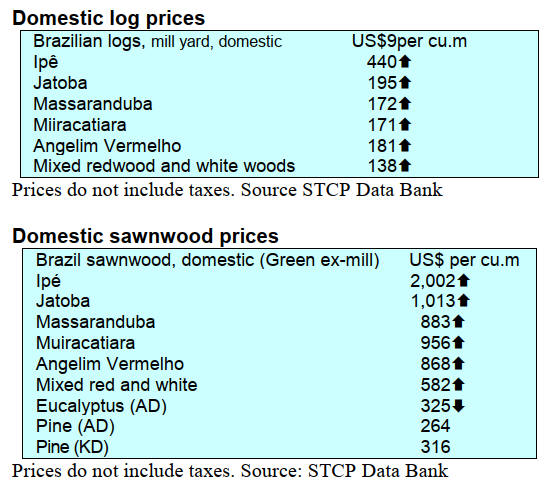
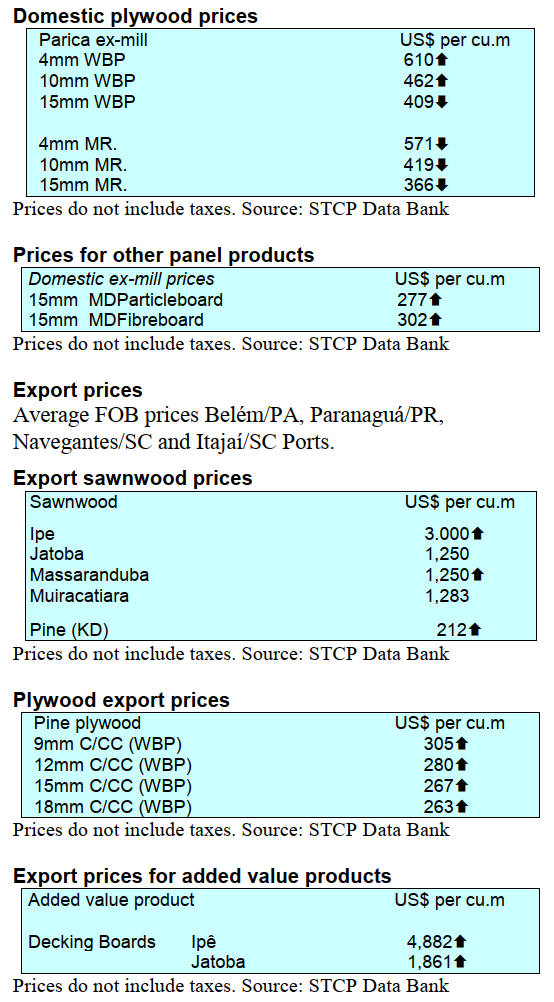
In February 2026, Brazilian exports of wood-based
products (except pulp and paper) decreased 22% in value
compared to February 2025, from US$278.5 million to
US$216.8 million.
Pine sawnwood exports decreased 30% in value between
February 2025 (US$67.0 million) and February 2026
(US$47.2 million). In volume, exports decreased 28%
over the same period, from 282,700 cu.m to 204,800 cu.m.
Tropical sawnwood exports increased 27% in volume,
from 20,900 cu.m in February 2025 to 26,500 cu.m in
February 2026. In value, exports increased 28% from
US$8.5 million to US$10.9 million over the same period.
Pine plywood exports decreased 20% in value in February
2026 compared to February 2025, from US$58.2 million
to US$46.4 million. In volume, exports decreased 14%
over the same period, from 186,400 cu.m to 160,300 cu.m.
Tropical plywood exports remained at 2,300 cu.m in
February 2026. In value, exports decreased 15% from
US$1.3 million in February 2025 to US$1.1 million in
February 2026.
As for wooden furniture, exports decreased 22% in value,
from US$46.3 million in February 2025 to US$36.3
million in February 2026.
Mercosur–EU Agreement - EU to become one of the
main destinations for Brazilian furniture
Brazil´s enactment of the Interim Trade Agreement
between Mercosur and the European Union represents a
significant step forward in the integration of economic
blocs and their value chains, marking a new phase of
international trade for Brazilian industry, including the
furniture sector.
After more than twenty years of negotiations the
Agreement expands market access, promotes the reduction
of tariff barriers and strengthens integration between the
economic blocs and their production chains.
For the Brazilian furniture industry, the Agreement takes
on strategic importance by reinforcing the EU as one of
the main destinations for furniture produced in the country
and as a priority market within the sector’s international
diversification strategy. Against the background of
increasing instability in traditional destinations such as the
US, expanding presence in higher value-added markets is
no longer merely an opportunity but becomes part of a
long-term positioning agenda.
However, the Agreement also imposes new technical
requirements related to access to the European market,
notably the EUDR which establishes strict criteria for due
diligence, traceability and proof of origin criteria for
production chains associated with land use and forest-
based inputs.
Thus, the Agreement should be understood not only as an
instrument for tariff reduction but also as a driver of
strategic transformation within the sector, requiring
technical capacity building, compliance with regulatory
requirements and coordinated institutional action to ensure
competitiveness, compliance and sustainability in the
internationalisation process of the Brazilian furniture
industry.
See: https://abimovel.com/mercosul-uniao-europeia-
promulgacao-marca-nova-etapa-e-abre-agenda-de-adaptacao-
estrategica-para-a-industria-moveleira/
Impact of the Middle East conflict on the Brazilian
timber sector
The escalation of the conflict in the Middle East has
generated direct and indirect impacts on international trade
in forest products, increasing uncertainty for the Brazilian
timber sector. Industry representatives and business
leaders have raised concerns mainly regarding rising
logistics costs, instability in international markets and
potential declines in external demand.
The Middle Eastern countries are an important destination
for Brazilian exports, particularly the United Arab
Emirates, Saudi Arabia that import timber for use in
construction, the furniture industry, pulp and paper and
reconstituted wood panels.
According to the Paraná Association of Forest-Based
Companies (APRE), these markets are also important for
the State of Paraná, especially for exports of pulp and pine
sawnwood, which in 2025 totalled approximately US$61.2
million and US$20.5 million, respectively.
The initial effects of the conflict are associated with rising
oil prices, which increase maritime transport costs and put
upward pressure on international freight rates, reducing
the competitiveness of lower value-added products such as
sawnwood. Geopolitical instability may also lead to the
reorganisation of maritime routes, logistical delays and
container shortages.
Additionally, increased military spending and potential
economic slowdowns in the region are likely to reduce
investment and consumption, thereby affecting demand for
forest products. This context introduces a new risk factor
for a sector that is highly dependent on global logistics
stability and international trade.
See: https://www.madeiratotal.com.br/guerra-no-oriente-
medio-reflexos-na-atividade-madeireira/
Through the eyes of industry
The latest GTI report lists the challenges identified by the
private sector in Brazil.
chrome-
extension://efaidnbmnnnibpcajpcglclefindmkaj/https://www.itto-
ggsc.org/static/upload/file/20260317/1773728709112724.pdf
9. PERU
January export performance
The Center for Research on Global Economics and
Business of the Association of Exporters (CIEN-ADEX)
has reported wood product exports reached a FOB value of
US$6.1 million in January, an increase of over 50%
compared to the US$4.1 million achieved in the same
period of 2025.
Exports included semi-finished products (US$3.1 million)
along with sawnwood (US$1.6 million), firewood and
charcoal (US$549,000), furniture and its parts
(US$349,000) and construction products (US$238,000).
The leading destination was France with shipments
totalling US$1.6 million. The United States followed with
US$1.2 million, the Dominican Republic with
US$647,000, China with US$516,000 and Belgium with
US$492,000.
OSINFOR monitored more than 214,000 hectares of
forest in Ucayali
With a commitment to contributing to the conservation of
the Peruvian Amazon forests in coordination with forest
users the Supervisory Agency for Forest Resources and
Wildlife (OSINFOR) monitored 214,891 hectares of forest
in the Ucayali region during 2025. This included permits
in native communities, timber concessions, private
properties and conservation concessions.
Priority was given to monitoring the shihuahuaco tree, a
species included in the CITES convention and of high
commercial value.
“Monitoring the shihuahuaco requires a stricter process
due to its status as a threatened species. Therefore, it is
necessary to verify 100% of the trees reported as moved in
the field, which demands greater levels of precision and
rigor, especially in hard-to-reach areas”, explained a
supervisor from OSINFOR Ucayali.
As a result of the responsible management of logging
permits in the region Ucayali registered a low rate of
unauthorised extraction on land with permits, at only 3%
nationwide.
See: https://www.gob.pe/institucion/osinfor/noticias/1360580-el-
osinfor-superviso-mas-de-214-000-hectareas-de-bosques-en-
ucayali
San Martín: updating forest zoning
As part of the updating of Forest Zoning information in
San Martín the Ministry of Agrarian Development and
Irrigation, through the National Forest and Wildlife
Service (SERFOR) and the Regional Government of San
Martín reported progress of more than 70% toward
completing this process which will strengthen the
sustainable management of the territory.
The Forest Zoning update aims to validate changes
occurring in the territory in order to make decisions based
on technical information.
See: https://www.gob.pe/institucion/serfor/noticias/1370294-san-
martin-actualizacion-de-la-informacion-de-la-zonificacion-
forestal-avanza-en-mas-del-70-por-ciento
SERFOR coordination to tackle illegal logging in the
Andean Region
The National Forest and Wildlife Service (SERFOR)
reaffirmed its commitment to promoting a coordinated
regional agenda to combat illegal logging and strengthen
forest governance within the framework of the Second
Regional Workshop on Environmental Regulatory
Frameworks, held in Lima.
The event brought together authorities, specialists and
representatives from Bolivia, Colombia, Ecuador and Peru
on 18 March with the aim of exchanging experiences,
identifying common challenges and promoting joint
actions against illegal logging and the associated timber
trade in the Andean region.
During the workshop Peru presented its main advances in
forest traceability and control of the timber trade,
positioning itself as a regional leader in the
implementation of tools aimed at ensuring the legal origin
of wood.
See: https://www.gob.pe/institucion/serfor/noticias/1368214-
serfor-lidera-articulacion-regional-para-fortalecer-la-lucha-
contra-la-tala-ilegal-en-la-region-andina
|